
Book your survey today!
Damp problems in your home are caused by one of three things: water rising up through the ground into your walls, water coming in from outside through gaps or defects in the building fabric, or moisture from everyday living settling on cold surfaces. Left unaddressed, all three get worse over time and can cause damage to your home's structure, your decoration, and, in some cases, your health. If you are seeing signs of damp, the most important step is finding out which type you are dealing with before spending any money on treatment.
How Do You Know if You Have a Damp Problem?
Most damp problems make themselves known well before they become serious, if you know what to look for.
The signs vary depending on what is causing the damp, so they are worth paying attention to rather than dismissing as cosmetic. These are the most common things we find when we visit a Kent property for a damp survey.
- Dark or discoloured patches on walls or ceilings. These typically appear as damp grey, brown or yellow staining and are often the first sign that moisture has built up behind the surface. They may grow over time if the source of the problem is not addressed.
- Black mould on external walls, around window frames or in corners. Mould grows where warm air meets cold surfaces, which is why you will often find it on external walls, behind furniture, and in poorly ventilated spaces like bathrooms and wardrobes. It always needs investigating, even if it looks minor.
- Peeling or bubbling paint and wallpaper. When moisture reaches a wall surface from behind, it lifts the decorative layer. Repainting without fixing the cause is a short-term measure that rarely holds.
- A persistent musty smell. A room that smells damp even after airing and cleaning almost certainly has moisture somewhere in its fabric. This is a common early warning before anything is visible.
- White powdery deposits on brickwork or plasterwork. These salt deposits, sometimes called efflorescence, are left behind when moisture travels through masonry and evaporates at the surface. They are a strong indicator of rising damp and are worth taking seriously.
- Tide marks on lower walls. A horizontal stain running along the base of a wall is one of the most recognisable signs of rising damp. The water rises through the masonry and leaves a watermark as it retreats.
- Soft or crumbling plaster, particularly near skirting boards. Damp plaster loses its integrity and becomes chalky or loose over time. If your plaster sounds hollow when tapped or crumbles to the touch near floor level, moisture may have been present for some time.
- Spongy or discoloured skirting boards. Timber absorbs moisture readily. If your skirting boards feel soft, are pulling away from the wall, or show signs of staining or decay, this can be an early indicator of wet rot.
- Condensation running down windows or walls. Some condensation in cold weather is normal, but if water is regularly running down interior glass or walls, the ventilation in your home may need attention, or there may be a more significant moisture issue.
- Walls that feel consistently cold to the touch. Walls that remain cold even in heated rooms may be retaining moisture, which can be associated with penetrating damp or failing cavity wall insulation.
What causes damp problems in kent homes?
Not all damp is the same, and this is precisely why treatment without a proper diagnosis so often fails. Dean always says that the most expensive mistake a homeowner can make is treating the wrong type of damp.
The three main causes are quite different from one another, and each requires a different solution.
Rising Damp

You may have an issue with dampness rising from the ground through your walls, which is rising damp.
Penetrating Damp

There may be an issue with dampness seeping in from your roof or the top of the walls, penetrating damp.
Condensation

Your house/workplace could be subject to poor ventilation and airflow, which results in condensation.
Whatever the case, each damp problem requires a different damp proofing solution. While you can attempt some DIY, in our experience, for a long-term fix, it is a good idea to bring in the experts to ensure the problem is dealt with effectively and efficiently.
Can Damp Cause Health Problems?
There is evidence linking damp and mould to respiratory irritation, and this is worth taking seriously, particularly if children or anyone with an existing condition such as asthma lives in the property.
That said, the picture is not entirely straightforward.
Most of the research in this area is observational, and the strength of the link varies depending on the individual and the extent of the problem. If you have concerns about the health effects of damp in your home, the right person to speak to is your GP.
What we can tell you, from over twenty years of working in Kent homes, is that damp problems rarely improve on their own, and dealing with them sooner rather than later is almost always the better course of action.
Why Kent is susceptible to damp problems
We have been working in and around Kent for more than twenty years, and damp problems are genuinely more prevalent here than in many parts of the country. There are a few reasons for this, and they are worth understanding if you own or are buying a property in the area.
Kent's climate is wetter and more consistently mild than most people appreciate. Canterbury receives around 728mm of rainfall per year, and the county rarely experiences the extended dry spells that allow buildings to shed moisture naturally. Properties here are under almost constant low-level damp stress throughout the autumn and winter, with little recovery time in between.
The county also sits on significant areas of clay-rich soil. Clay swells when wet and shrinks when dry, and this continual movement can open up hairline cracks in walls and foundations over time. Those cracks become pathways for water, particularly around older brickwork and mortar.
The housing stock is the third factor. Kent has one of the highest concentrations of listed buildings in England, along with an unusually high proportion of homes built before damp-proof courses were standard practice.
Older buildings constructed with lime mortar and traditional brick behave very differently to modern properties, and many were simply not designed with the damp-proofing measures we would expect today. Over the years, well-intentioned but incorrect repairs using modern cement can create new problems by trapping moisture rather than allowing it to escape.
This combination of climate, geology and older buildings is why we see the range of damp problems we do across Kent, and why a proper survey matters so much more than a quick diagnosis.


Damp problems when buying or selling a property
Damp is one of the most common issues flagged in property surveys across Kent. If you are in the middle of a transaction and damp has come up, here is what I would suggest.
If you are buying:
Do not rely solely on the estimate in the surveyor's report. Most RICS surveyors will flag a risk and recommend further specialist investigation. That recommendation is worth following.
A damp survey from a Property Care Association-registered specialist will give you a clear diagnosis and a realistic cost for putting it right, which puts you in a much stronger position to negotiate the purchase price or ask the vendor to carry out works before exchange.
If you are selling:
Our strongest advice is to get any known damp problem assessed and properly treated before the property goes to market.
An unresolved damp issue flagged in a buyer's survey can stall or derail a sale. A completed, documented repair with a ten-year guarantee is a far better position to be in, and it removes a significant point of negotiation for the buyer.
We can arrange a fast-track survey if you are working to a deadline.
Diagnosing damp problems: What we check
Undertaking a Damp Survey
We may also use thermal imaging and hygrometers during the survey to measure air humidity. This helps our team understand the problem more clearly.
Our team will carefully check the inside walls and floors. If we think the problem starts outside, we will also look at the roof and gutters.

Our Customer Reviews
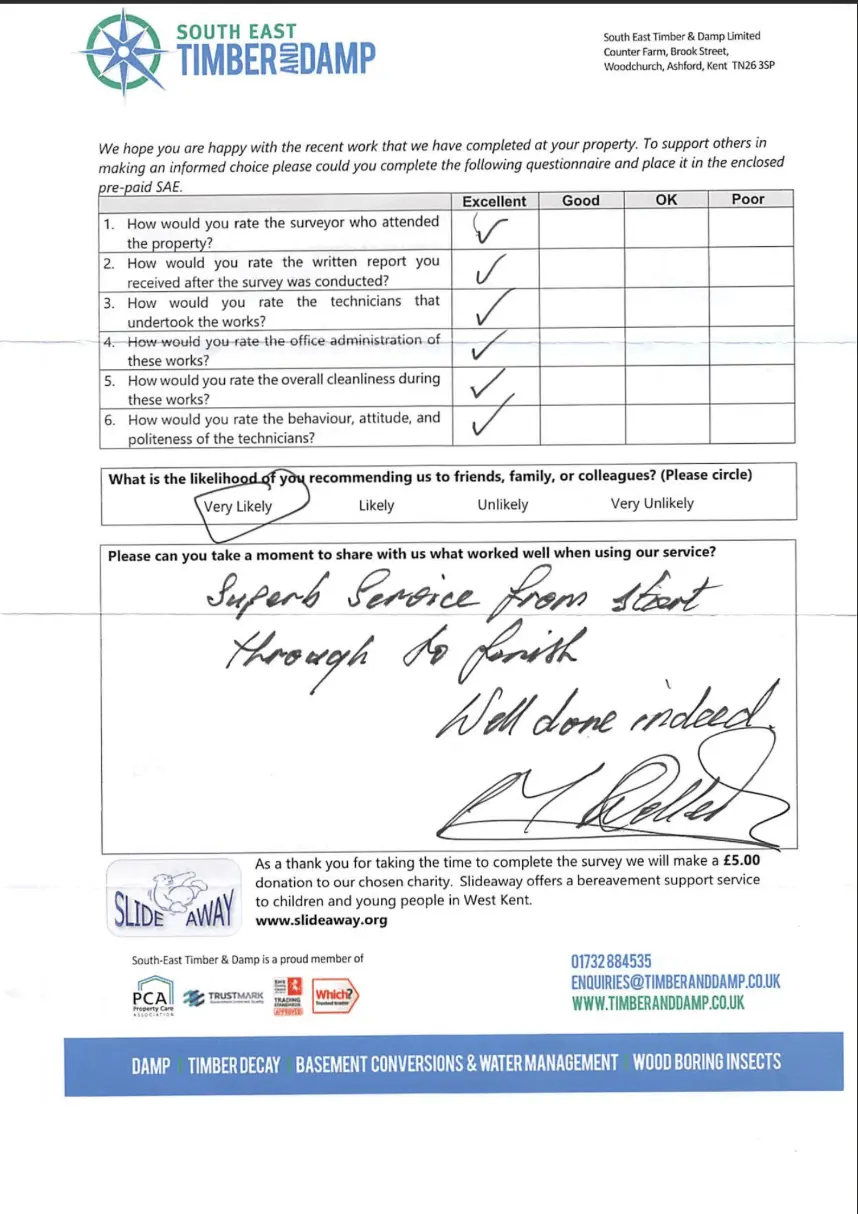
Swanley – Timber Treatment
Very likely to recommend
6 'Excellent' scores
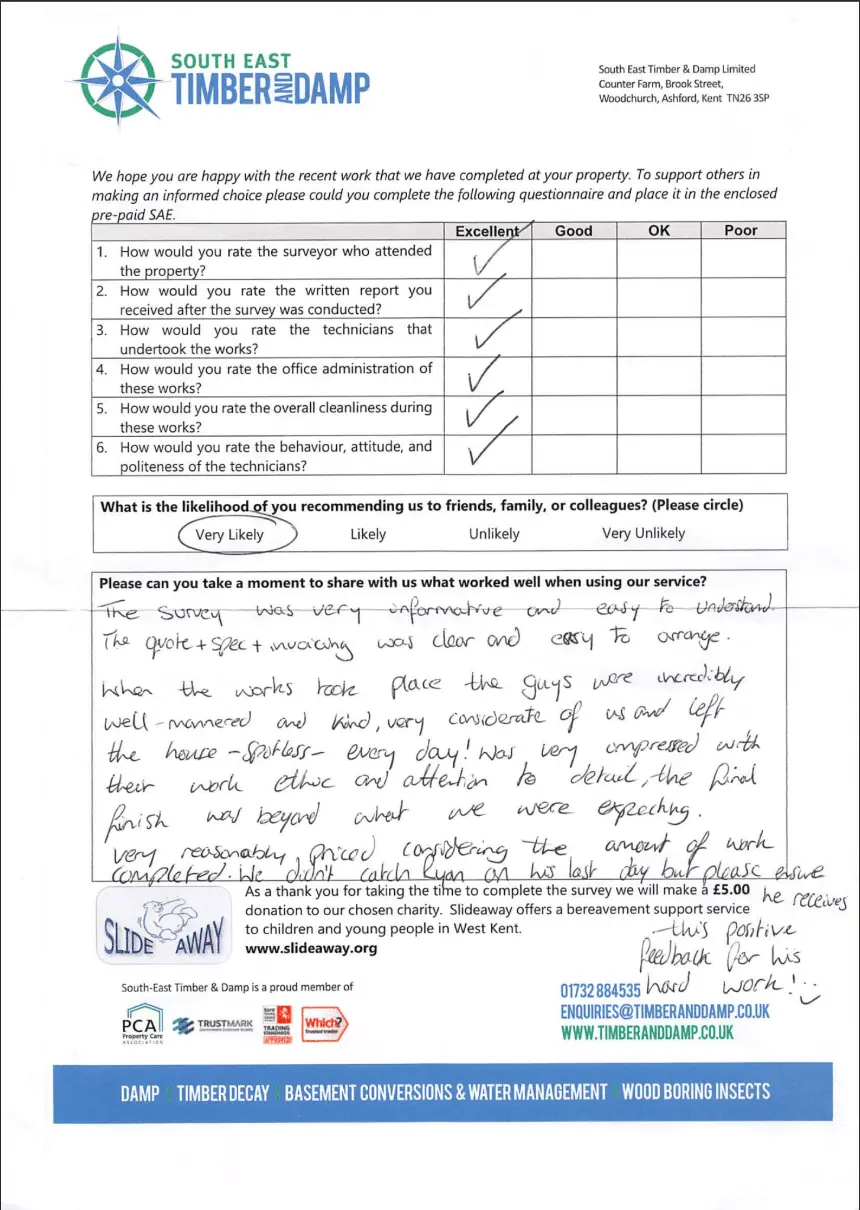
Mouldham – Damp Proofing
Very likely to recommend
6 'Excellent' scores
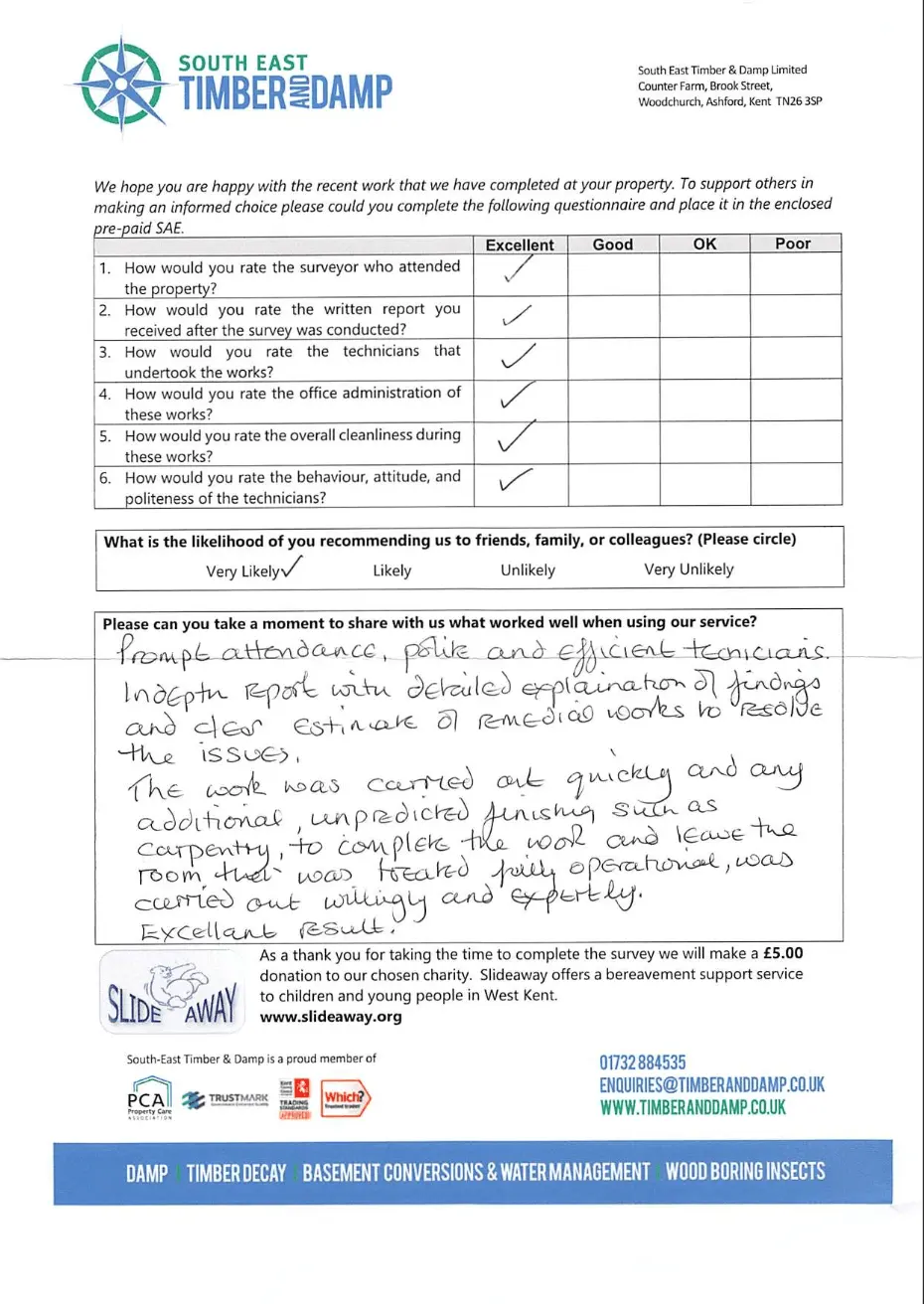
Marden – Damp Proofing
Very likely to recommend
6 'Excellent' scores
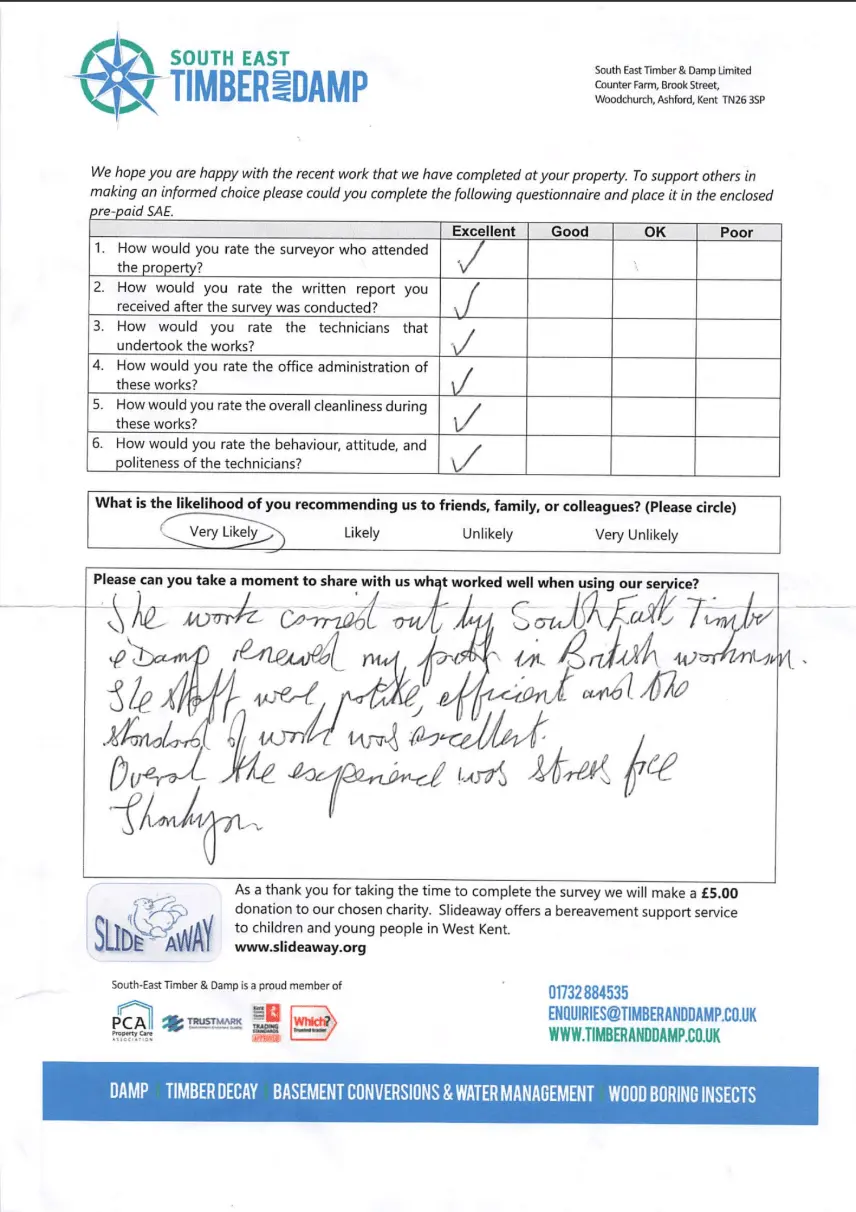
Maidstone – Damp Proofing
Very likely to recommend
6 'Excellent' scores
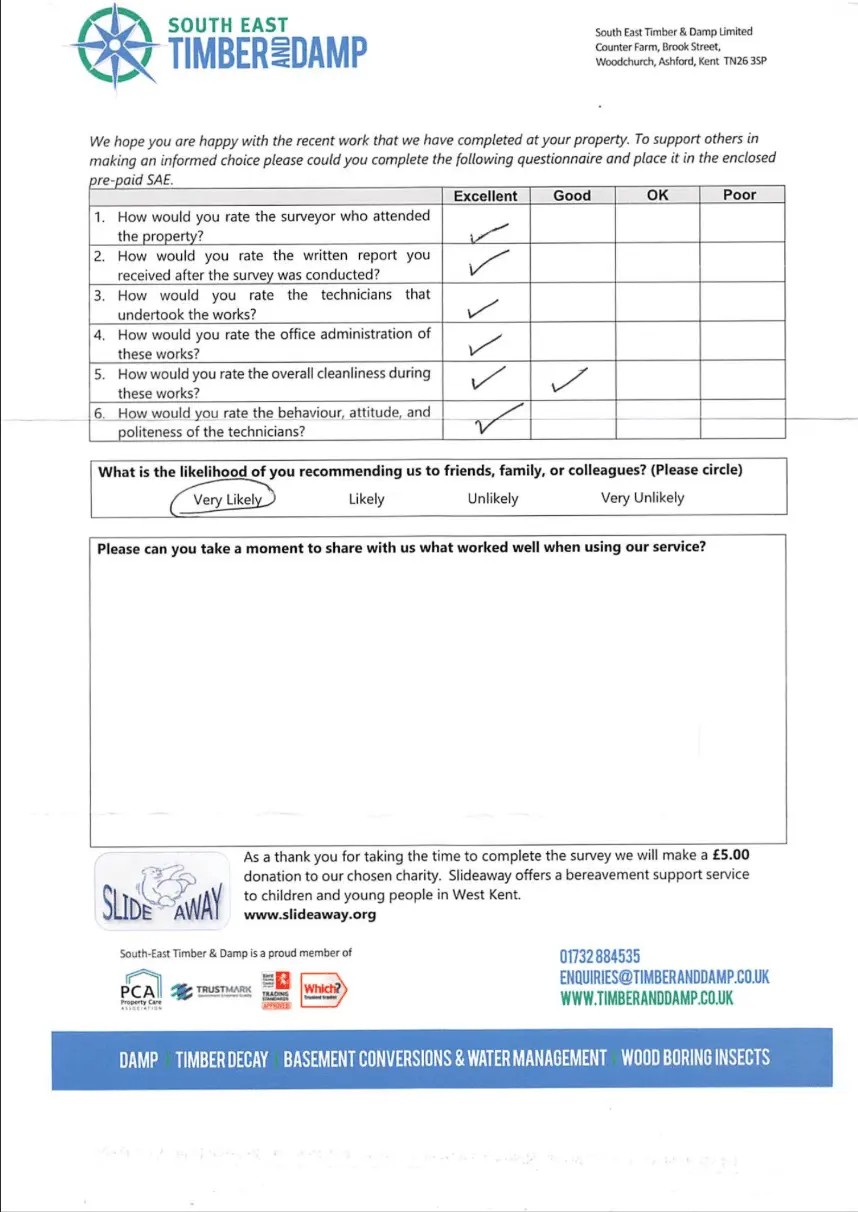
Kemsing – Sevenoaks – Damp Proofing
Very likely to recommend
6 'Excellent' scores
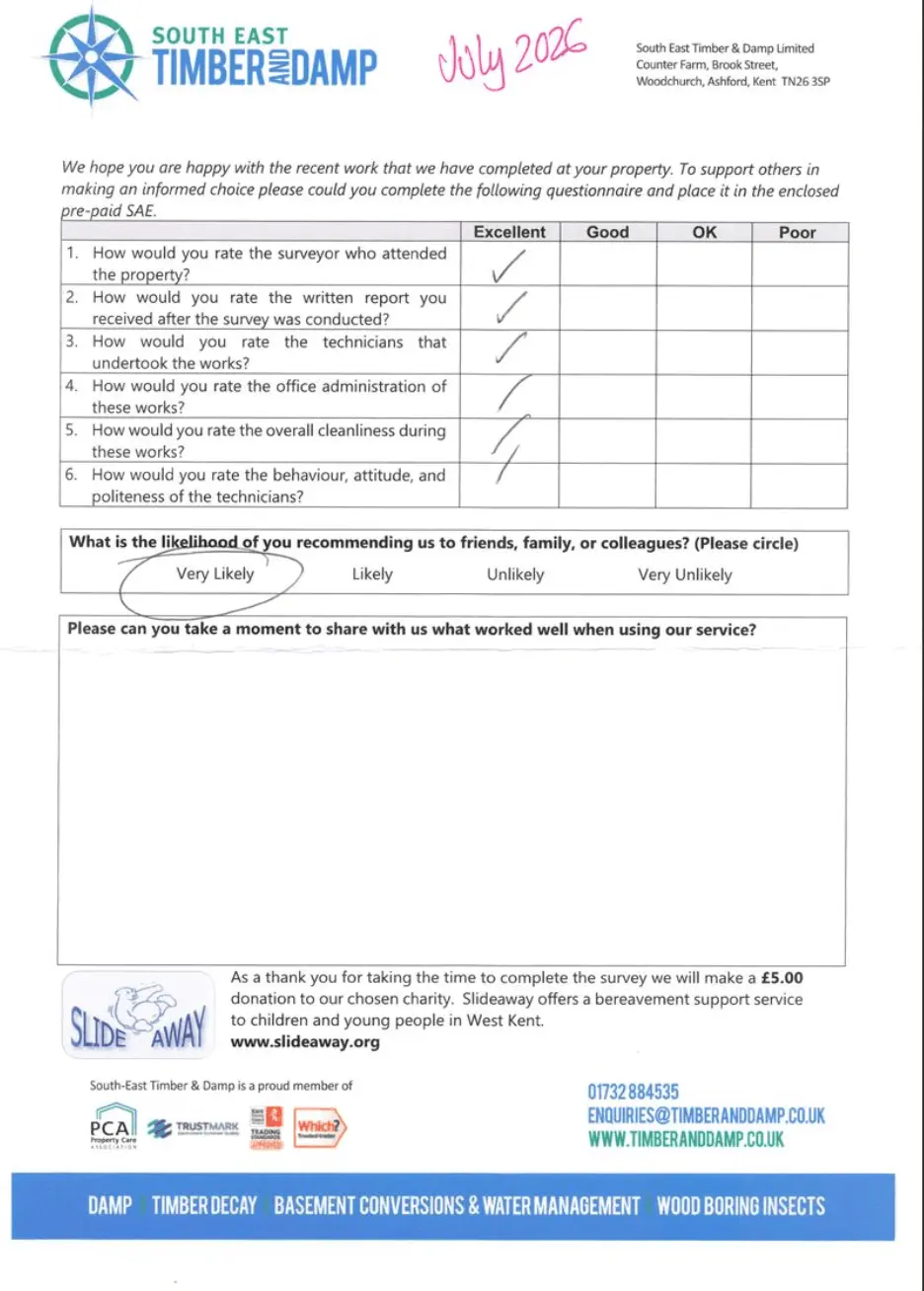
Hythe – Damp Proofing
Very likely to recommend
6 'Excellent' scores
When Should You Call a Damp Specialist?
There is quite a bit you can do yourself to improve ventilation, reduce condensation and keep on top of basic maintenance. We always try to tell our customers what those steps are before recommending anything more involved. But there are specific signs that mean it is time to get a professional in rather than reaching for the paintbrush.
You should book a damp survey if:
- Damp patches or mould keep returning after you treat them. If the problem comes back within weeks of being dealt with, the underlying cause has not been resolved.
- You can see tide marks, salt deposits or discolouration on lower walls. These are strong indicators of rising damp and need a specialist diagnosis.
- Your skirting boards or timber near floor level feel soft or damaged. Wet rot can develop quickly once timber begins absorbing moisture.
- A property survey has flagged damp in a home you are buying or selling. An independent specialist survey gives you a clear diagnosis and negotiating position.
- The musty smell persists despite ventilation improvements. A lingering damp smell usually means moisture is present in the fabric of the building.
- Damp is affecting more than one room or area. Multiple affected areas may indicate a more widespread structural problem.
Our team covers the whole of Kent and South East London. All of our surveyors are CSRT-qualified and members of the Property Care Association, which means you can trust the diagnosis you receive.
We offer snapshot surveys, comprehensive surveys and fast-track surveys depending on what you need.
Damp Proofing Cost
Each job is priced individually based on its requirements. Here are a few examples of work we have done in the last few months.

Frequently Asked Questions
Our latest case studies



Need help? Book a survey at a time to suit your schedule
Our mission is to give you the peace of mind you deserve when it comes to waterproofing your house or business. Commission a survey from our team to assess your situation professionally.