
FAQs
Kent’s leading damp proofing specialist
Book your survey today!
Working with us

What happens during a damp survey with South East Timber and Damp?
This is a fair question because booking a survey with someone you have not used before can feel a bit of a leap of faith.
Here is what actually happens. Dean or a member of our office team will arrange a time that suits you and visit the property.
They will start with an external inspection, checking the fabric of the building, guttering, downpipes, render, pointing, and ground levels around the base of the walls.
Then they will work through the interior, taking moisture readings at multiple points with specialist meters and carefully checking any areas you have flagged, as well as anywhere they think warrants a closer look.
The whole visit typically takes between forty minutes and two hours, depending on the size and complexity of the property.
One thing worth knowing is that we ask you to move any obstructions away from walls before we arrive, furniture, boxes, or anything that limits access to the areas we need to inspect.
We cannot move these ourselves, and anything we cannot access will be noted in the report as uninspected.
After the survey, Dean can talk you through his main findings. You will then receive a full written report setting out what we found, what we think is causing it, and what we would recommend.
We will always tell you honestly if the answer is simple maintenance rather than specialist treatment. That is just how we work.
Why do you charge for surveys when some companies offer them for free?
We charge because we think it is the right thing to do, and we are always happy to explain why.
When a company offers a free survey, its income depends on finding work to carry out. That conflict of interest is not something we are comfortable with.
Over the years, we have been called out after other contractors recommended thousands of pounds of unnecessary treatment on properties that needed nothing more than a gutter repair.
Dean charges for his time because it has value and because a paid survey is an honest one. He has no financial incentive to find a problem that is not there.
Many of our clients have told us the survey fee was the best money they spent, either because it confirmed there was nothing serious to worry about or because it identified a real problem before it became much more expensive.
Our surveys start from £95 and go up to £295 for a more comprehensive inspection.
We don't think we've ever had a customer tell us, after a survey, that they thought it was a con.
What qualifications should I look for when choosing a damp specialist in Kent?
The two qualifications that really matter are the CSTDB (Certificated Surveyor of Timber and Dampness in Buildings), formerly known as CSRT, covering knowledge regarding dampness and timber issues within a building and the CSSW (Certificated Surveyor in Structural Waterproofing) which is for the designing and installation of below-ground water management systems. Dean holds both of these and regularly attends training sessions to update his knowledge.
These are the industry's recognised specialist qualifications, and they are not easy to obtain. Fewer than 150 people in the UK hold both, and Dean is one of them.
Beyond qualifications, look for full contractor membership of the Property Care Association rather than just PCA training, which is a different and considerably lower bar.
(Sadly many "fake" companies display the PCA logo without holding membership!)
TrustMark registration and Trading Standards approval are also worth checking.
In Kent, as in any area with a lot of older housing stock, the risk of encountering contractors who present themselves as damp specialists without meaningful credentials is real.
It is always worth asking directly what qualifications the surveyor who will actually visit your property holds, not just the company in general.
Do damp works come with a guarantee?
Yes, in the vast majority of cases where we carry out treatment works, those works are covered by a guarantee of up to ten years.
We are transparent about why we do not offer the twenty or thirty-year guarantees you will sometimes see advertised elsewhere: our insurance sets a realistic limit, and we think a long guarantee from a company that might not exist in ten years is not worth a great deal.
Our guarantee means something because we intend to still be here to honour it. We also offer the option of a GPI insurance-backed guarantee for a one-off fee, which provides additional protection independent of us as a business.
Full details are on our guarantees page, and if you have any questions about what is and is not covered for a specific job, just ask and we will be straight with you.
How much does a damp survey cost?
Our surveys are priced at three levels, depending on what you need:
- £95 plus VAT – our entry-level survey, for homeowners with a single area of concern
- £195 plus VAT – for pre-purchase or sale surveys, giving you the full picture, for example before buying a house
- £295 plus VAT – our fast-track survey, with a full written report sent within 48 hours
Visit our survey page for a full breakdown of what's included at each level.
Whichever you need, you get an honest, qualified assessment and a written report, with no incentive for us to find a problem that isn't there, because we have no treatment to sell off the back of it. In our experience the survey fee is almost always the most cost-effective first step you can take, whether it confirms there's nothing to worry about or catches a real problem early.
On many occasions we can guide homeowners to some simple maintenance that alleviates the issues.
What areas do you cover?
We are based near Ashford in Kent and cover Kent, part of South East London, and East Sussex. That includes towns across the county such as Tunbridge Wells, Tonbridge, Sevenoaks, Maidstone, Faversham, and the surrounding villages, as well as the period streets of South East London.
If you are not sure whether you are within our area, just give us a call on 01732 884535 and we will let you know. If we are not the right people for your location, we will try to point you towards someone who is.
How quickly can you come out?
It depends on how busy we are and where you are, but we always do our best to get to you promptly, and we understand that some situations, like a property sale with a deadline, cannot wait around.
The best thing to do is call us on 01732 884535 or request a survey online, tell us what is going on and whether you are working to any kind of deadline, and we will give you a realistic idea of when we can be there.
How do I find an independent damp surveyor who won't sell me unnecessary services?
Independent surveyor vs Contractor surveyor
A genuinely independent surveyor, particularly one who's a member of the Property Care Association, shouldn't be selling anything. Their role is to give advice and guidance, and possibly a specification for the moisture management work needed, without carrying out the work themselves. That survey is then usually passed to a qualified contractor for further advice and costings.
We're not an independent surveyor, we're a contractor surveyor, meaning the same company that surveys can also carry out the work. We stay honest by approaching every survey as though we were independent, with no pressure on the customer to act on anything we find. The benefit of using a qualified CSRT and PCA member contractor surveyor like us is that we can identify likely costs at the same time as the survey, rather than needing a second visit from a separate contractor afterwards.
Do damp specialists always find problems, just to sell their services?
If someone's already contacted a damp specialist, they usually already suspect there's a problem, so really it's about establishing how serious that problem actually is, and how urgent it is to deal with.
On receiving your enquiry, we will ask a selection of questions to see if it is an issue we can help with. On many occasions it can be due to internal pipes leaking, roofing issues, window sealant not doing its job or other maintenance issues such as leaking gutters that need repairing.
What we do see very often, though, is unqualified contractors identifying issues that simply don't exist and recommending expensive treatments that aren't necessary. Unfortunately, these are usually offered as free surveys.
What's the difference between CSRT and CSTDB?
CSTDB stands for Certificated Surveyor of Timber & Dampness in Buildings, and it's the current name for what used to be called CSRT, Certificated Surveyor in Remedial Treatments. The qualification itself still covers both timber and damp together, it's the name and the way it's examined that's changed, not the scope.
There's also a separate, narrower qualification called CSDB, Certificated Surveyor of Dampness in Buildings, which covers damp only, without the timber module. Someone with CSDB hasn't been examined on timber decay and infestation in the same way a CSTDB surveyor has.
Both qualifications are delivered by the Property Care Association. Dean holds the full CSTDB qualification, alongside CSSW for structural waterproofing, meaning he's qualified to assess damp, timber and below ground waterproofing issues, not just one piece of the picture.
Damp FAQs
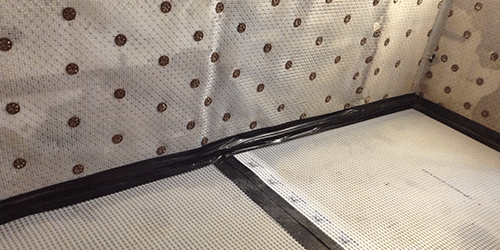
How much does damp proofing in Kent cost?
This is probably the question we get asked more than any other, and honestly, it's one of the hardest to answer without first knowing what you're dealing with.
Costs can range from a few hundred pounds for a straightforward maintenance fix to several thousand for a full damp proof course installation with replastering.
What we can tell you is that the single biggest factor in keeping costs down is getting the diagnosis right the first time. We have visited so many properties where money has already been spent on the wrong treatment, and that always ends up costing more in the long run.
A damp survey with us starts from £95 for a homeowner survey, up to £295 for a fast-track report within 48 hours, and in our experience, it's almost always the most cost-effective first step you can take.
What are the signs that I need damp proofing?
The most common ones are a persistent musty smell that does not go away even when the windows are open, damp patches on walls or ceilings that seem to come back after you have painted over them, peeling wallpaper or bubbling paint, white powdery deposits on internal walls (that is salt being drawn out by moisture), black mould in corners or around windows, and a tide mark running along the lower section of a wall.
It is so important to identify the SOURCE of the moisture ingress – this could be moisture created internally (condensation). Moisture penetrating through walls, from leaking pipes or damaged render (penetrating damp) or damp rising from the ground (rising damp). Sometimes basic maintenance works can rectify these issues.
In Kent properties, particularly the older ones, we also quite often see soft or spongy skirting boards at ground level, which is a telltale sign that moisture has been seeping in for some time.
If you are seeing any of these, it is worth getting someone in to have a proper look rather than reaching for the paintbrush.
How long does damp proofing last?
Firstly, a treatment will last if the issue has been correctly identified. This is something we insist on: identify the cause so the right system can be implemented. A professionally installed treatment, done correctly and with the right materials for your property type, should be effective for around twenty to thirty years.
Our own guarantee covers up to ten years, and we are upfront about why. That is what our insurance allows us to offer honestly.
Beyond the treatment itself, how long damp proofing lasts also depends on keeping up with basic maintenance around your property.
Clear gutters, maintained pointing, and sensible ground levels around the building all make a real difference to how well any treatment performs over time.
Is damp proofing carried out from the inside or outside?
It depends on what the problem is and where the moisture is coming from.
For rising damp requiring a chemical damp proof course injection, the work is almost always carried out internally, drilling into the mortar joint from inside the property.
For penetrating damp caused by defects in the external fabric of the building, the most important first step is usually an external repair, whether that is guttering, pointing, rendering, or roofing.
In some cases, particularly in older Kent properties with solid walls, we may need to address things both internally and externally to get a lasting result.
This is exactly why we always carry out a proper survey first, because the right answer genuinely does depend on what we find.
Do I need planning permission for damp proofing Kent work?
For most standard residential properties, no.
Damp proofing is generally treated as maintenance rather than a structural alteration, so planning permission is not usually required. The exception is if your property is listed or sits within a conservation area, and Kent has a lot of both. With nearly 18,000 listed buildings across the county, this is not an uncommon situation for our clients.
In those cases, any treatment that involves altering original materials or the fabric of the building may need consent from the local planning authority before work begins. Dean has extensive experience working on listed properties across Kent and knows what is and is not permissible.
If you are not sure about your property's status, we can help you work through that before any work is agreed.
Condensation vs damp
Is it condensation or damp? How can I tell the difference?
This is probably the most common moisture question we get, and the honest answer is that the two are often confused, even by people who should know better. Getting it right matters, because the fix for one is completely different from the fix for the other, and treating the wrong one is how people end up wasting money.
Here is the simple version. Condensation sits on the surface. Damp comes through the surface.
Condensation is usually worse in winter and often worse in the morning. It forms on cold surfaces like windows, tiles, and the corners of external walls, particularly in bathrooms, kitchens, and bedrooms where there is a lot of moisture in the air and not much ventilation. It tends to come with black spotty mould, and crucially, if you wipe the surface, it clears, and the wall underneath is sound.
Damp behaves differently. It is there all year round, it does not care what time of day it is, and it shows up on specific walls regardless of the weather inside. You will often see tide marks, salt deposits, or plaster that has gone soft or crumbly. The wall itself feels wet or cold, not just the surface.
A quick test you can do at home: if moisture clears when you open a window for a while and improve airflow, you are most likely looking at condensation. If it keeps coming back no matter what you do, there may be an underlying damp problem worth investigating.
The reason this matters so much is cost. Condensation is usually a ventilation and heating issue, and often you can sort it yourself with better airflow, an extractor fan, and not drying washing indoors. Damp is a structural issue that needs proper diagnosis. We would always rather tell you it is condensation you can manage yourself than sell you treatment you do not need. Watch our 5-minute condensation explainer video.
I have black mould in the corner of a room. Does that mean I have damp?
Not necessarily, and this is worth understanding before you spend any money.
Black spotty mould in corners, around windows, or behind furniture is far more often a sign of condensation than structural damp. It appears where warm, moist air meets a cold surface and cannot escape, which is why you see it most in winter, in bathrooms and bedrooms, and in spots where the air does not move much.
Structural damp, by contrast, tends to bring staining, tide marks, and salt deposits rather than fluffy black mould, because the affected area is often too wet and too salty for mould to take hold in the same way.
So if you have black mould in a corner, the first questions to ask are about ventilation and heating, not damp proofing. Often the answer is better airflow rather than building work. If the mould keeps returning after you have improved ventilation, or if it comes with any of the damp signs above, that is the point to get someone out to take a proper look.
Watch our 5-minute Condensation explainer video.
Penetrating Damp FAQs
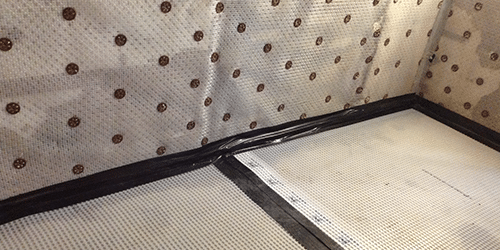
What is penetrating damp and how is it different from rising damp?
Penetrating damp is moisture that enters a building horizontally through the walls, roof, or any part of the external fabric that has become vulnerable to water ingress. Rising damp, by contrast, travels upward from the ground through the base of the wall.
The practical difference matters a great deal for treatment, because the solutions for each are completely different.
Penetrating damp can appear at any height in a building and tends to be more noticeable after or during heavy rainfall, whereas rising damp is almost always confined to the lower metre or so of a ground floor wall.
What causes penetrating damp?
The most common causes are defects in the building's external fabric that allow rainwater to enter. Blocked or leaking gutters and downpipes, cracked or eroded render, failed pointing in brickwork, worn window frames and sills, damaged roofing or flashings, and poorly sealed around pipework penetrations are all frequent culprits.
In Kent, where we see many older solid-wall properties, the walls themselves can also become more porous over time as the original lime mortar erodes, making them increasingly vulnerable to wind-driven rain.
Cavity wall insulation that has become saturated or contaminated is another cause we encounter regularly, as it can bridge the cavity and transfer moisture directly to the inner wall.
If you want to learn more read ourr blog "How to tell if you have Penetrating Damp"
How do I know if I have penetrating damp?
The most telling sign is a damp patch that appears or worsens during or after periods of rain.
Unlike rising damp, it can appear anywhere on a wall, not just at low level, and it often has a fairly defined edge rather than the gradual tide mark associated with rising damp. You may also notice damp patches below window sills, around chimney breasts, or on walls directly beneath guttering.
Black mould is less common with penetrating damp than with condensation, because the affected area tends to be too wet and often contains salts from the masonry that inhibit mould growth.
Can penetrating damp be fixed without a specialist?
Sometimes, yes. If the source is clearly a blocked gutter, a cracked roof tile, or a small gap in pointing, addressing the defect directly can resolve the problem without professional remedial treatment. It is always worth checking the obvious external causes first.
However, where the source is less clear, or where moisture has already penetrated into the wall structure and caused damage to plaster or timber, a professional survey is the most reliable way to identify exactly what is happening and prevent the same problem recurring.
Treating the symptoms without finding the source is one of the most common reasons penetrating damp comes back.
Will penetrating damp cause structural damage if left untreated?
Yes, and the longer it is left, the more expensive it tends to become.
Persistent moisture within a wall structure will eventually break down plaster and render, cause timber elements such as window frames, lintels, and floor joists to decay, and can create the conditions for wet rot or dry rot to take hold.
In older properties, sustained water ingress can erode the mortar joints between bricks over time, weakening the wall fabric itself.
Penetrating damp is one of those problems that rarely stays contained, so catching it early and finding the source is always the more cost-effective approach.
Rising Damp FAQs
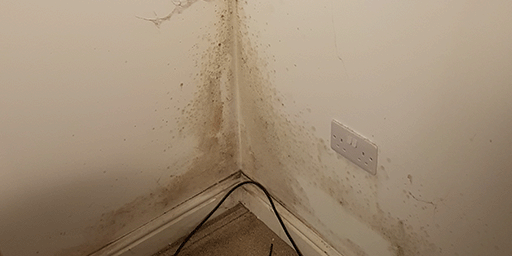
What are the signs of rising damp?
The most tell-tale sign is a damp tide mark on the lower section of a wall, usually no higher than about a metre to a metre and a half from the floor.
You may also notice peeling paint or wallpaper, white powdery deposits on the wall surface (this is salt left behind as moisture evaporates), a persistent musty smell, and damage to skirting boards at ground level.
Crucially, rising damp stays low. If damp patches are appearing higher up the wall or on ceilings, you are more likely looking at penetrating damp or a plumbing issue rather than rising damp.
What causes rising damp?
Rising damp happens when groundwater travels up through the base of walls by capillary action, essentially the same process as a sponge drawing up water.
It usually occurs because the damp proof course (DPC) has failed, been bridged, or in older properties built before 1875, may never have been installed at all. Common causes of bridging include external ground levels that have built up over time, render that runs continuously from above the DPC down to ground level, and debris or insulation within the cavity wall.
In Kent, where a significant proportion of the housing stock predates the Second World War, failed or absent damp proof courses are one of the most common issues we encounter.
Will rising damp go away on its own?
No. Rising damp will not resolve itself without intervention. As long as groundwater is present in the ground surrounding the property, and there is no effective barrier stopping it, moisture will continue to travel up through the wall.
Left untreated, it will progressively damage plasterwork, cause salt contamination of the wall fabric, and can eventually lead to wet rot or dry rot in any timber that remains in contact with the affected area, including skirting boards and floor joists.
How is rising damp treated?
The most common professional treatment is the installation of a new chemical damp proof course using an injection cream, which is applied into the wall at regular intervals to form a water-resistant barrier within the masonry.
Once the injection is complete, affected plaster will usually need to be replaced using a salt-resistant render, as old plaster retains contaminated salts that will continue to cause problems even after the damp source has been resolved. In some cases, lowering external ground levels or clearing a bridged DPC may be sufficient on its own.
The right treatment depends entirely on the cause, which is why a proper diagnosis before any work begins is so important.
How much does rising damp treatment cost?
The cost varies depending on the extent of the problem, the length of wall affected, and whether re-plastering is required alongside the damp proof course installation. A professional damp survey is the starting point, and with South East Timber and Damp that starts from £95.
The survey will give you a clear written assessment of the problem and an accurate cost for any remedial works recommended, so you are not working from guesswork.
As a general point, treating rising damp early is almost always considerably cheaper than leaving it until the damage has spread to plasterwork, timbers, and decorative finishes.
I have read that rising damp is a myth. Is that true?
This comes up a lot, and it deserves a straight answer rather than a defensive one.
There is a genuine and important truth behind the “myth” claim, and we will not pretend otherwise. Rising damp is massively over-diagnosed. A great deal of what gets labelled rising damp is actually condensation, penetrating damp from a defect like a leaking gutter, or a bridged damp proof course where ground levels or render have been built up over time. Studies and experienced surveyors agree that genuine rising damp is far less common than the number of “rising damp” treatments sold would suggest.
A lot of that over-diagnosis comes from one thing: the free survey. When a company’s income depends on finding work, and the surveyor is on commission, there is an obvious incentive to find a problem and reach for the injection kit. A handheld damp meter pressed against a wall will happily give a high reading from salts or surface moisture that has nothing to do with rising damp at all. This is exactly why we charge for our surveys and have no treatment to sell off the back of them.
So where does that leave the myth? Our honest position is this. Rising damp is real, but it is genuinely rare, and it is diagnosed far more often than it actually occurs. The headline “rising damp is a myth” is a useful corrective to an industry that has cried wolf for decades, but taken literally it goes too far the other way. Walls without a working damp proof course, particularly in older properties, can and do draw moisture up from the ground.
The real takeaway is not whether rising damp exists. It is that you should never accept a rising damp diagnosis or pay for treatment on the back of a free survey from someone who profits from the answer.
Get an honest, independent assessment from a qualified surveyor who has no treatment to sell you, and the right answer for your property will become clear. Sometimes that answer is a chemical damp-proof course. Far more often it is something simpler and cheaper.
Sadly, on many occasions we have been called in for a second opinion after the client has received a huge quotation for rising damp works. We have subsequently found that there is not a rising damp issue at all. The moisture ingress is from another cause; our report reflects exactly what the source is and the treatments required. On many occasions it is far less than the first quote they had received, deeming that the whole room needs treatment.
Should I get a second opinion on a damp survey result?
If you're not happy with the opinion given in your first survey, then yes, absolutely get a second opinion.
By choosing a Property Care Association member with a fully qualified surveyor in the first place, you shouldn't need a second opinion at all, because the first opinion should already be right.
In practice, we're asked for second opinions often, and around nine times out of ten, our opinion differs from the original survey.
If we do agree with the first opinion, we'll tell the customer that too, rather than inventing a different answer just to justify the visit.

Buying or Selling a Property
My mortgage survey has flagged damp or woodworm. What do I do now?
First, do not panic. This is one of the most common things to come up in a property purchase, and in the large majority of cases it is manageable. It does not usually mean the sale is dead.
What has typically happened is that the lender’s valuation surveyor has noticed signs of damp or timber problems and, because they are not a specialist, has recommended that a proper damp and timber report be carried out before they release the full mortgage. Lenders do this to protect the property they are lending against.
The lender will usually do one of two things. They may ask for the report and any necessary work before they lend, or they may apply a retention, which means they hold back a sum of money roughly equal to the cost of the repairs until the work is done and signed off.
The step that moves things forward is a specialist survey from a qualified, independent firm. That report identifies what is actually going on, whether work is genuinely needed, and what it would cost. Importantly, lenders want that report to come from a properly accredited specialist, which is where our PCA membership and Dean’s qualifications matter. A report from a credible source is what satisfies the lender and gets the funds released.
Quite often our report is good news for the buyer because what the valuer flagged turns out to be far less serious than feared or caused by something straightforward. Either way, you end up with a clear, documented position you can take back to the lender and usually back to the seller to discuss who pays.
Do I need a damp survey before buying a house?
If you are buying an older property, or your homebuyer’s survey has raised any concern about damp or timber, then yes, a specialist survey is almost always worth it before you exchange.
A standard homebuyer’s survey is carried out by a general surveyor across the whole property. They will flag a possible damp or timber issue, but they are not specialists in it, so they tend to recommend further investigation rather than give you a definitive answer. A specialist damp and timber survey goes deeper in that one area and tells you exactly what you are dealing with, how serious it is, and what it will cost to put right.
That information is genuinely valuable before you commit. It either gives you peace of mind that the problem is minor, or it gives you a precise figure you can use to renegotiate the price or ask the seller to contribute. Buyers who skip this step and assume the worst sometimes pay over the odds, and buyers who skip it and assume the best sometimes inherit a problem they could have negotiated away. A clear report puts you in control either way.
Will damp or woodworm stop me selling my house?
It can complicate a sale, but it rarely needs to stop one, as long as you handle it properly rather than hope it goes unnoticed.
Any damp or timber issue is likely to be picked up in the buyer’s survey, and their lender may then ask for a specialist report or want the work done before they lend. The buyers who run into real trouble are usually the ones who left a known problem undisclosed and hoped the surveyor would miss it. They rarely do, and a problem discovered late in a sale causes far more damage to the deal than one that has been dealt with openly.
The strongest position to sell from is to have had a proper specialist survey, to have had any genuine issue resolved, and to be able to hand the buyer documented, guaranteed work. That gives buyers and their lenders confidence and takes the issue off the table. If you know there is something there, dealing with it before you go to market is almost always cheaper and smoother than scrambling to fix it mid-sale with a nervous buyer and a ticking clock.
What is the difference between a damp survey and a homebuyer’s survey?
A homebuyer’s survey is a general overview of a whole property, carried out by a general surveyor. It looks at everything from the roof to the walls to the windows, and it will flag a possible damp or timber issue, but it will not usually diagnose it in detail. Instead, it tends to recommend that a specialist take a closer look.
A specialist damp and timber survey is that closer look. It focuses specifically on damp and timber, goes into far more detail, identifies exactly what is causing the problem, and sets out what, if anything, needs doing and what it would cost. The two work together: the homebuyer’s survey spots the question, and the specialist survey answers it.
Basement & Cellar Waterproofing FAQs
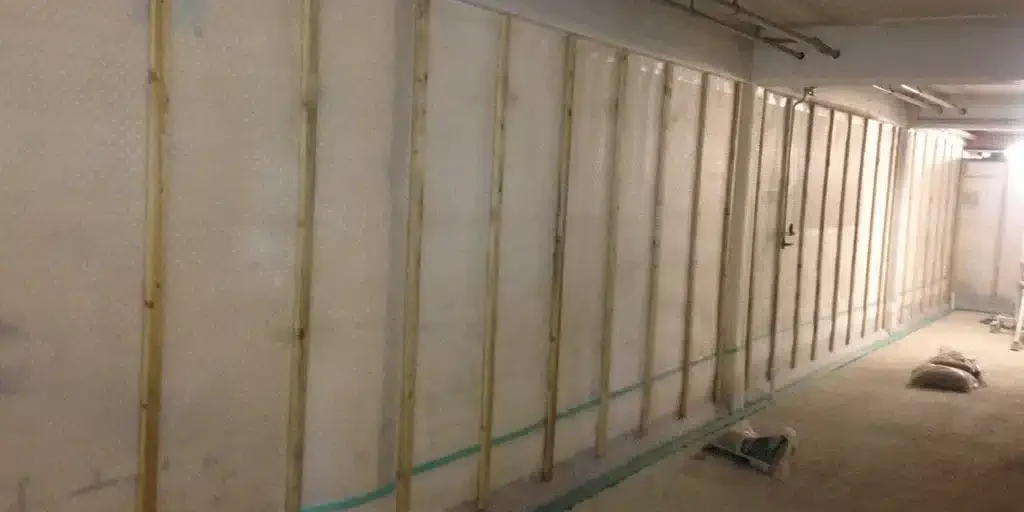
Can a damp Victorian cellar be made dry and usable?
Yes, in almost all cases it can, and it's one of the most satisfying types of work we do.
Period cellars that have sat damp and unused for decades can very often be turned into genuinely dry, usable rooms, whether that's storage, a utility space, a home office, or a proper living area.
It's worth being honest about what "dry" actually means here. You can't magically make a below ground structure completely dry, what you can do is properly manage the moisture and manage any water ingress.
Waterproofing an old cellar was never about painting something on the walls and hoping for the best, older properties simply weren't built with the kind of barriers modern homes have, so the right approach is a properly designed system suited to that specific building.
Depending on how the space will be used and what's actually happening with the water, the solution can vary quite a bit. If it's simply naturally present moisture in the structure, that might be as straightforward as improving heating and ventilation or introducing a moisture-managing system to stop that moisture from affecting decorative finishes. If there's active, live water coming in, we'd usually recommend a proper water managing solution, including below-ground sump pumps and suitable water exit pipework, right up to a full Type C water management system for the more involved cases.
We survey the cellar, work out where the water is coming from and how the space behaves through the seasons, then design the system around it.
Because we both design and install the work ourselves, the people who plan it are the same people who carry it out, so nothing gets lost in translation between a designer and a separate contractor.
Done properly, the results are reliable and long lasting.
What is the difference between tanking and a cavity drain membrane?
These are the two main ways of waterproofing a basement or cellar, and they work on completely different principles. Knowing the difference helps you understand what you are being quoted for.
Tanking means applying a waterproof barrier directly to the walls and floor, usually a coating or a slurry, so that water is physically held back and cannot get through. It seals the structure. This is sometimes called a Type A system. It can be very effective, but it relies on the barrier being complete and on the structure being able to take the water pressure pushing against it.
A cavity drain membrane takes the opposite approach. Instead of trying to hold water out, it accepts that some moisture may reach the wall and manages it. A dimpled plastic membrane is fixed to the walls and floor, creating a small gap behind it. Any water that comes through is channelled down into a drainage channel and usually taken away by a sump and pump. This is known as a Type C system, and it is the approach we most often use in older properties because it works with the building rather than fighting it.
Neither is automatically better. The right choice depends on the property, the water conditions, and how the space will be used. That decision is exactly what the waterproofing design stage is for.
What are Type A, B and C waterproofing systems?
You may see these terms on quotes or in survey reports, and they come from the British Standard for waterproofing, BS 8102. They are simply three different ways of keeping a basement dry.
- Type A (barrier protection): a waterproof barrier applied to the structure, such as tanking. Water is held back by the coating.
- Type B (structural protection): the structure itself is built to be watertight, for example specially designed waterproof concrete. This is most common in new builds rather than period cellars.
- Type C (drained protection): a cavity drain membrane system that manages water and drains it away, rather than holding it back. This is the approach most suited to older properties.
In many basements, particularly older or more challenging ones, the safest long-term result comes from combining more than one type. A good waterproofing design will set out which approach, or combination, is right for your property and why.
Do I need a qualified waterproofing designer, or can any builder do it?
This is one of the most important things to understand before you let anyone work on a basement, because it is where a lot of money gets wasted.
Basement waterproofing should be designed by a qualified waterproofing specialist, not simply installed by a general builder. The recognised qualification is the CSSW, the Certificated Surveyor in Structural Waterproofing, and the British Standard itself recommends that a suitably qualified person designs the system. Dean holds the CSSW qualification, which is one of the reasons clients with challenging period cellars come to us.
The reason it matters so much is that below-ground waterproofing has almost no margin for error. Water is relentless, and a system that has been installed without proper design, or by someone who does not fully understand how water behaves in that particular structure, can fail in ways that are expensive and disruptive to put right. Getting the design right at the start is what makes the difference between a basement that stays dry for decades and one that causes problems within a couple of years.
Because we both design and install the work, the qualified person who plans your system is involved all the way through to completion. That continuity is genuinely important with this kind of work.
Can you waterproof a basement in a listed building?
Yes, and it is an area we specialise in, but it needs handling with real care and the right permissions.
Listed buildings and properties in conservation areas are subject to additional rules, and any work that affects the fabric or character of the building may require listed building consent before it begins. Basement and cellar waterproofing can usually be designed in a way that respects the building and stays within what is permitted, but it has to be approached thoughtfully rather than with a one-size-fits-all system.
Dean has extensive experience working on listed and historic properties across Kent, which has a great deal of older and protected housing stock. That means we understand both the technical side of keeping an old cellar dry and the conservation side of doing it in a way that protects the building and keeps you the right side of the regulations. Where consent is needed, we can help you understand what is involved before anything is agreed.
My cellar floods or gets standing water in winter. Can that be solved?
Usually yes, even when it feels like a lost cause. Seasonal flooding or standing water, where a cellar is dry in summer but wet through the winter months, is a common pattern in older properties and it is very often solvable with the right system.
This kind of seasonal water is typically driven by groundwater levels rising and falling with the weather. Trying to simply seal it out with a coating can struggle against that sort of water pressure, which is why a managed drainage approach, a Type C cavity drain membrane with a sump and pump, is frequently the most reliable answer. Rather than fighting the water, it collects it and takes it away, keeping the room dry whatever the season is doing.
The first step is always a survey to understand where the water is coming from and how the space behaves across the year. Once we know that, we can design a system that deals with the worst the winter throws at it, not just how the cellar looks on a dry day.
Does a basement waterproofing system need maintenance?
Yes, and anyone who tells you a system is completely maintenance-free is not being straight with you. The good news is that the maintenance involved is straightforward.
Where a system includes a sump and pump, as many do, that pump is what keeps the space dry, so it needs to be kept in good working order. We recommend periodic servicing to check the pump is working properly and that the drainage channels are clear, much as you would service a boiler. Many systems include a backup pump and an alarm for added peace of mind, particularly where the basement is used as living space.
A well designed and well installed system, looked after with simple regular checks, will keep a basement reliably dry for many years. We will always explain exactly what your particular system needs so there are no surprises, and we can talk through servicing options with you.
How much does basement waterproofing cost?
As with most of our work, the honest answer is that it depends, because no two basements are the same. The cost is shaped by the size of the space, the condition it is in, how much water you are dealing with, the type of system needed, and whether the room is being finished as living space afterwards.
What we can say is that basement waterproofing is a significant piece of work and worth doing properly once, rather than cheaply twice. The biggest cause of expensive basement problems is a system that was not correctly designed in the first place, because putting right a failed basement is far more disruptive and costly than getting it right at the outset.
The starting point is always a proper survey. That tells us exactly what your basement needs, and from there we can give you an accurate, written cost for the design and installation, so you are working from facts rather than guesswork.
Woodworm FAQs
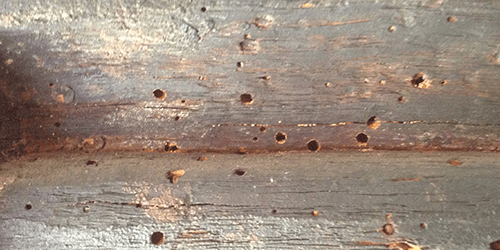
How do I know if I have active woodworm?
The most common sign is small round exit holes in your timber, typically around 1 to 2mm in diameter. You may also notice a fine powdery dust around or beneath these holes — this is called frass, and it is produced by the larvae as they burrow through the wood. If the frass looks fresh and pale, rather than old and discoloured, there is a good chance the infestation is still active. Dead beetles on windowsills during the summer months are another tell-tale sign. If you are unsure, get a professional to take a look rather than leaving it.
Is woodworm dangerous to the structure of my home?
It can be, yes, depending on where it is and how long it has been left. Woodworm in furniture is rarely a structural concern.
However, woodworm in load-bearing timbers such as joists, rafters, or floorboards is a different matter entirely.
Over time, larvae can significantly weaken the structural integrity of timber. If you have spotted signs of woodworm in any structural timber, do not delay in getting it assessed.
Can I treat woodworm myself?
For a small, contained infestation in a single piece of furniture, a proprietary woodworm treatment fluid from a DIY store may be sufficient.
However, for anything involving structural timber, large areas, or where you are not certain of the beetle species involved, we would always recommend getting a professional survey first.
The reason is that different beetle species respond to different treatments, and treating the wrong thing wastes time and money.
Getting the diagnosis right at the start saves a great deal of trouble later.
What time of year is woodworm most active?
The adult beetles emerge from the wood between May and September, which is when you are most likely to spot the exit holes and the beetles themselves around windowsills.
However, the larvae are active all year round inside the timber. This means the damage is ongoing regardless of the season.
If you spot signs of woodworm at any time of year, it is worth acting on it rather than waiting.
Does woodworm spread from one piece of wood to another?
Not in the same way that dry rot does.
The larvae will not simply migrate from one piece of timber to a neighbouring one.
However, once the adult beetles emerge, the females will lay eggs in nearby timber.
So while the existing infestation will not spread on its own, there is a real risk of new infestations starting close by if the problem is not treated.
We have seen woodworm bought in to a home as logs to burn accessing surrounding timbers and cuasing issues.
This is particularly important where timbers are close together, such as in a roof space or beneath floorboards.
Does damp make woodworm worse?
Yes. Most woodworm species actively prefer damp timber. The higher the moisture content of the wood, the more attractive it is for beetles to lay their eggs.
This is why woodworm is particularly common in older properties where there may be underlying damp issues.
Treating the woodworm without addressing any damp problem is only half the solution.
At South East Timber and Damp, we look at both together, which is one of the advantages of using a specialist who understands timber and damp as a combination rather than in isolation.
How long does woodworm treatment take?
The treatment itself is usually straightforward and can often be completed in a single visit, depending on the size of the affected area.
We use a water-based treatment sprayed into the affected timber and across the surrounding area.
There may be a short drying period required before the space can be used normally again.
We will always talk you through exactly what to expect before we start, so there are no surprises on the day.
Is woodworm treatment covered by a guarantee?
Generally, yes, woodworm treatment carried out by South East Timber and Damp is covered by our 10-year guarantee, backed by the GPI Guaranteed Protection Insurance Scheme.
This means the guarantee is independently insured, so it remains valid even in the unlikely event that circumstances change.
It is also transferable to a new owner if you sell the property, which can be a useful document to have when it comes to conveyancing.
Dry Rot and Wet Rot FAQs
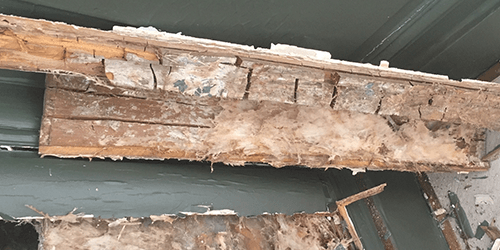
What is the difference between dry rot and wet rot?
This is the question we get asked more than any other when it comes to timber decay, and it is an important one to get right because the two need very different approaches to treat.
Wet rot is the more common of the two. It occurs when timber remains damp for a prolonged period, usually because of a persistent moisture source nearby, such as a leaking pipe, damaged guttering, or rising damp.
The good news is that wet rot tends to stay confined to the immediate area where the moisture is present. Remove the moisture source, and the rot stops progressing. The affected timber will need to be repaired or replaced, but the problem does not spread through the fabric of the building.
Dry rot is a different matter entirely, and it is why the name causes so much confusion. Despite being called "dry" rot, it is actually caused by a specific fungus called Serpula lacrymans that needs damp timber to get started, but once established it has the extraordinary ability to transport moisture through the building itself, spreading through masonry, plaster, and brickwork to reach and infect timber that was previously perfectly dry. This is what makes it so serious and why it needs professional treatment as a matter of urgency.
In Kent, where a significant proportion of the housing stock is Victorian, Edwardian, or older, we encounter both regularly. Period properties with original floor joists, roof timbers, and subfloor voids that have been exposed to damp for years are particularly vulnerable.
How do I know if I have dry rot or wet rot?
Both produce some similar symptoms, which is why correct identification really matters before any treatment begins.
With wet rot you are typically looking for timber that has darkened or discoloured, feels soft or spongy when pressed, and may crack along the grain. There can be a musty smell, and in some cases you will see a white or brown fungal growth on the surface of affected timber. The key point is that it stays close to the source of moisture.
Dry rot has some distinctive additional signs. Look for cracking across as well as along the grain, which gives the timber a cuboid appearance, sometimes described as looking like a grid or cracked chocolate. White or grey strands, a bit like cobwebs, spreading across surfaces are a classic early sign of mycelium growth.
In more advanced cases, you may see a fruiting body, which looks like a fleshy orange or brown mushroom with a distinctive dusty red spore deposit around it. Orange or red dust on floors or surfaces near timber is one of the clearest indicators that dry rot is present.
If you are at all unsure, please do not attempt to treat it yourself. Misdiagnosing dry rot as wet rot and treating accordingly is one of the most costly mistakes we see, because it leaves the fungus free to keep spreading behind walls and under floors while the homeowner thinks the problem has been resolved.
Can dry rot or wet rot cause structural damage?
Yes, both can, though dry rot carries the greater structural risk because of its ability to spread.
Floor joists, roof rafters, window frames, stair strings, and any other load-bearing timber are all vulnerable, and the internal damage is often far more extensive than the surface signs suggest.
We regularly carry out surveys in Kent properties where a small visible patch of rot turns out to be the tip of a much larger problem once the affected area is properly opened up.
Wet rot, while less aggressive, can still cause significant structural weakening in the timber it affects. Skirting boards, door frames, window frames, and subfloor timbers close to moisture sources are all commonly affected.
Left long enough, wet rot can compromise the structural integrity of any load-bearing timber it takes hold in.
Both types are best caught early. The longer either is left, the more timber will need to be removed and replaced, and the more expensive the overall remediation becomes.
How is dry rot treated and is it different from wet rot treatment?
The treatments share some common elements but are genuinely different in scope.
For both types, the single most important first step is finding and eliminating the source of moisture. Treating the rot without addressing what is causing it is a waste of money, because the conditions that allowed it to develop will simply cause it to return. Once the source of moisture has been properly controlled, an active outbreak will very quickly begin to recede.
Once the moisture source is resolved, affected timber needs to be assessed and either treated in place or replaced where it has been structurally compromised.
For wet rot, once the source is dealt with and the area dried out, treatment is usually straightforward. Affected surfaces are treated with a fungicidal solution, and damaged timber is repaired or replaced. The contained nature of wet rot means the remediation zone is generally well defined.
Dry rot requires a considerably more thorough approach. Because the fungus can spread through masonry, the affected area needs to be carefully mapped before any work begins. All infected timber must be removed with a margin of apparently sound timber on either side to be safe.
Masonry in the affected zone is treated with a masonry biocide. Replacement timber should be pre-treated, and ventilation improvements are usually needed to prevent the conditions recurring.
In older Kent properties, this can be a significant piece of work, but cutting corners on dry rot remediation is a false economy.
A course of revisits following completion of the works is vital. Removing the source of moisture and the damaged timber isn't the end of the job, monitoring the area afterwards is what confirms the problem has genuinely been dealt with, rather than just assuming it has.
Will dry or wet rot affect my property sale in Kent?
Yes, both will be flagged by a surveyor and will require attention before most buyers or their mortgage lenders will be comfortable proceeding.
Dry rot in particular can cause significant concern during a sale because of its reputation for spreading, and some buyers will walk away from a property where it is present without having the full picture of what is involved in resolving it.
The most straightforward position to be in when selling is to have had a proper specialist survey carried out, the source of moisture identified and resolved, and any remedial timber works completed and covered by a written guarantee. That documentation gives buyers and lenders confidence that the problem has been professionally resolved rather than simply painted over.
If you are buying a property in Kent or South East London where dry or wet rot has been flagged in a homebuyer's survey, a specialist timber and damp inspection before you exchange will give you a clear picture of the extent of the problem, what it will cost to put right, and whether the treatment that has already been applied is adequate. That information is almost always worth having before you commit.
What makes someone a genuine dry rot specialist?
A genuine dry rot specialist has a proven track record of dealing with true dry rot, and will issue certification on completion of the work confirming there'll be no regrowth.
That's actually one of the reasons we carry out reinspections after completing works, before issuing that certification.
Unfortunately, some contractors will label any decay as dry rot when the real issue is something else entirely, such as wet rot. It's another good reason to ask the right questions before engaging a specialist.
What are the earliest signs of dry rot I could spot myself?
The earliest signs usually come as a combination of things.
Most noticeable is a distinctive odour, often described as musty, damp, or almost mushroom-like, which is the fungus and its airborne spores.
Alongside that, look for visual signs of decay on contact joinery such as skirting boards and floorboards, where cracking becomes clearly visible.
DIY Damp Proofing FAQs

Does DIY damp proofing actually work?
It can, but it depends entirely on what you are dealing with.
DIY approaches work well for condensation and minor maintenance issues such as clearing gutters, improving ventilation, and patching small areas of damaged pointing.
They are not effective for rising damp or penetrating damp caused by a failed damp-proof course or by structural water ingress. Applying a surface-level fix to a structural problem can delay proper treatment and often increase the eventual repair cost.
What is the difference between damp proof paint and a damp proof course?
Damp-proof paint is a surface coating applied to interior walls. It can help manage condensation on cold surfaces, but it does not address moisture travelling through the wall itself.
A damp proof course (DPC) is a physical or chemical barrier installed within the wall, designed to stop rising damp at its source.
These are two very different things, and confusing them is one of the most common reasons DIY damp treatment fails to deliver the expected results.
How do I know when I need a professional damp specialist?
The clearest signs that a professional opinion is needed are:
- A tide mark on lower walls (particularly with white or yellowish staining).
- Damp that returns in the same place after you have cleaned or repainted it.
- A persistent musty smell with no obvious cause.
- Peeling wallpaper or plaster that is crumbling or bubbling.
- Damp patches that appear or worsen after rainfall.
If you are buying or selling a property in Kent or South East London, a damp survey is often required as part of the conveyancing process.
Will DIY damp treatment affect my property survey or mortgage valuation?
It can do, and this is worth thinking about carefully, particularly if you are planning to sell.
If a DIY treatment has masked an underlying problem without resolving it, a surveyor may still identify the original issue during a pre-purchase inspection.
Where damp has been treated but not properly remediated, it can affect a mortgage lender's valuation or lead to renegotiation of the sale price.
Having a professional treatment on record, backed by a written guarantee, provides far more reassurance to both buyers and lenders than a DIY approach.
Contact Our Team

Our team in the office are very experienced and knowledgable about the industry. Get in touch with them today to get the right advice in dealing with your damp issues.
Damp Case Studies



Need help? Book a survey at a time to suit your schedule
Our mission is to give you the peace of mind you deserve when it comes to waterproofing your house or business. Commission a survey from our team to assess your situation professionally.