
Dry rot is the one word that causes more panic than almost anything else in a survey report, and after 35 years surveying and treating it across Kent and the South East, I want to explain properly what it is. I’m Dean Webster, of everything I deal with, dry rot is the one word that causes the most panic when it lands in a survey report. So let’s take the fear out of it and explain, properly, what it actually is.
What is Dry Rot
Dry rot is an aggressive wood-destroying fungus. It’s not just a bit of damp timber going soft, it’s a living organism that actively feeds on and breaks down structural timber, and it can spread far beyond where you can see it.
Where it hides, and why
The fungus thrives wherever there’s a raised level of moisture hidden away from the naked eye. A classic example is timber within a suspended timber floor, set above a void with poor ventilation and a high moisture presence. That combination, damp and hidden, is exactly what dry rot needs to get going and spread.
What it looks like, early signs versus advanced
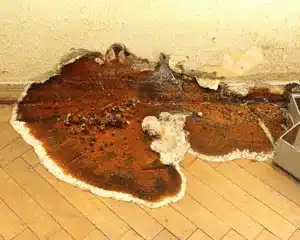
By the time an outbreak is visible to the naked eye, it’s often already well advanced. The early signs to look out for are:
Cracking or distorted timbers, particularly skirting boards
Suspended timber floors that move or feel spongy underfoot
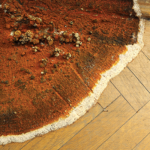
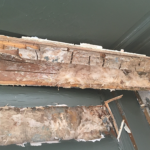
In more advanced cases, you’ll usually notice a strong, distinctive odour, and you may see a red dust spreading over surfaces, almost like brick dust, similar to what you’d see after someone’s drilled into masonry. That’s spore spread, and it’s a sign the outbreak has been established for some time.
Getting a proper diagnosis first
Before any treatment happens, confirming that it genuinely is dry rot, and not something else such as wet rot, is the single most important step. This needs to come from someone properly qualified, ideally a CSRT surveyor and PCA member, because misdiagnosis leads to the wrong treatment, wasted money, and outbreaks left to keep spreading.
How we treat it
Once dry rot is confirmed, the priority is always finding and reducing the source of moisture feeding it. Without that, the fungus will keep coming back regardless of what remedial work is carried out. Only once the moisture source is under control do we move on to the physical repairs, which typically include:
- Replacing any timbers that have been affected
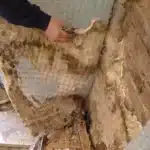
- Removing internal plaster, since the outbreak often grows vertically up through the construction behind it
- Treating the area to stop spore spread
- In severe cases, replacing structural timbers such as lintels above windows, usually with concrete
Why we go back to check
Revisits are a genuinely important part of how we certify a job as complete. We deliberately leave access to below-floor structures open during the works so our surveyor can return and reinspect, checking specifically for any signs of regrowth. As standard, we carry out two revisits after the works are finished before we’re satisfied enough to issue certification. It’s not a box-ticking exercise, it’s there because regrowth is more common than most people realise.
What people usually get wrong
A few things come up again and again:
- Dry rot eradication is typically far more involved and expensive than wet rot repairs, which is exactly why correctly identifying which one you’ve got matters so much.
- It’s bad practice to carry out repairs, assume the job’s done, and hand over a long-term guarantee without proper reinspection to confirm there’s no regrowth.
- We increasingly see general builders steer clear of dry rot outbreaks altogether, because they know the regrowth risk is high if it’s not handled properly. That’s actually a good sign, it means the risk is being taken seriously rather than papered over.
- There will usually be some ongoing maintenance tasks that fall to the homeowner afterwards, not everything ends the day the contractor leaves.
Keeping it from coming back
After treatment, the main job is keeping the affected area as dry as realistically possible. In practical terms that means:
- Improving subfloor ventilation and keeping an eye on suspended timber floors
- Making sure rainwater goods aren’t leaking water onto the fabric of the building
- Monitoring for any continued leaks if internal plumbing was part of the original cause
Stay vigilant, but don’t let it take over your life. A bit of regular checking goes a long way.
Does it change for older or listed buildings?
This might surprise you, but older buildings are often easier to deal with than modern cavity construction, where an outbreak can spread through the cavity itself, making it much harder to identify early. That said, listed and historic buildings do need extra care. It often means liaising with conservation officers to make sure they’re happy with the products being used, while still making sure the homeowner ends up with a proper, lasting fix.
A real example
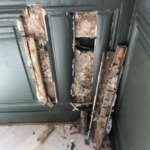
We’re currently working on a dry rot eradication project in a four-storey house, and it shows exactly how far this can go if it’s left unchecked. Water ingress from above had encouraged the outbreak to spread across three floors, destroying suspended timber floors, timber lintels, and box sash windows, and it had even grown through a storage cupboard, affecting items stored inside.
The cause was simple. The elderly couple living there hadn’t carried out any maintenance in around 50 years. Every time it rained, water came in through the roof next to the chimney breast, and their solution was to place a bucket underneath and empty it into the bathtub once it filled. That went on for decades.
As part of the remedial works, we’re renewing the roof coverings and leadwork, replacing all the broken and defective rainwater goods, and repointing areas where long-term water presence has washed away the original mortar. Where we’re repointing, we’re using a suitable age-related lime-based product rather than a modern cement-based one, so the wall can keep drying out naturally the way it was originally built to.
If you’d like to see how dry rot is sometimes misdiagnosed in the real world, our Dry Rot? Mistaken Identity series looks at genuine cases we’ve dealt with in Kent, worth a read if you want to see just how easily it can be confused with something else.
The bottom line
Dry rot sounds frightening, and left unchecked it genuinely can cause serious damage, but it’s also very treatable when it’s properly diagnosed and dealt with by someone qualified to do it. If you’ve spotted any of the early signs, cracking timbers, a floor that moves underfoot, or a musty smell you can’t place, it’s always worth getting it checked properly rather than waiting.
Book a survey or get in touch with the team.
About Dean Webster
Dean Webster is the Managing Director of South East Timber & Damp, based in Woodchurch, Kent. He has over 35 years of hands-on experience surveying and treating damp, timber decay, and structural waterproofing issues across Kent, South East London, and East Sussex. Dean holds the CSRT/CSTDB (Certified Surveyor in Remedial Treatments) and CSSW (Certified Surveyor in Structural Waterproofing) qualifications, the highest recognised credentials in the industry, and is a member of the Property Care Association. He has a particular interest in listed and historic buildings, where treatment needs a more considered approach than standard modern construction.