Dry Rot

Book your survey today!

Table of contents
    dry rot

    The Basics of Dry Rot

    Quite simply, dry rot is trouble for any property. It is an aggressive fungal infection that will impact the structural foundation of the timber in your property and needs to be treated by professionals quickly and efficiently.

    Let's dispel a common misconception right from the start: it does not exist in dry conditions; it will only occur in the damp.

    It results from either a dry rot spore landing on a surface or cross-contamination from another material. However, the spores aren't enough on their own. They need oxygen, the correct temperatures, and the proper sustenance in the form of food and water, all found in your wood.

    Dry Rot

    The spores that cause Dry Rot (Serpula lacrymans) need fuel to grow and multiply rapidly. Their primary energy source is the cellulose and hemicellulose in the wood. As it attacks your timber, it will dry it out, leaving it brittle and vulnerable. It doesn't, however, attack the structural lignin of the wood.

    While there are similarities between Dry and Wet Rot, both require dampness to grow; the main difference is that dry rot will spread beyond its initial moisture source, often bridging non-timber surfaces in the hunt for cellulose-rich wood.

    Once established, it will grow into what's called a sporophore (which looks a little like a mushroom), dispelling millions of spores that could result in even more Dry rot.

    Dry Rot

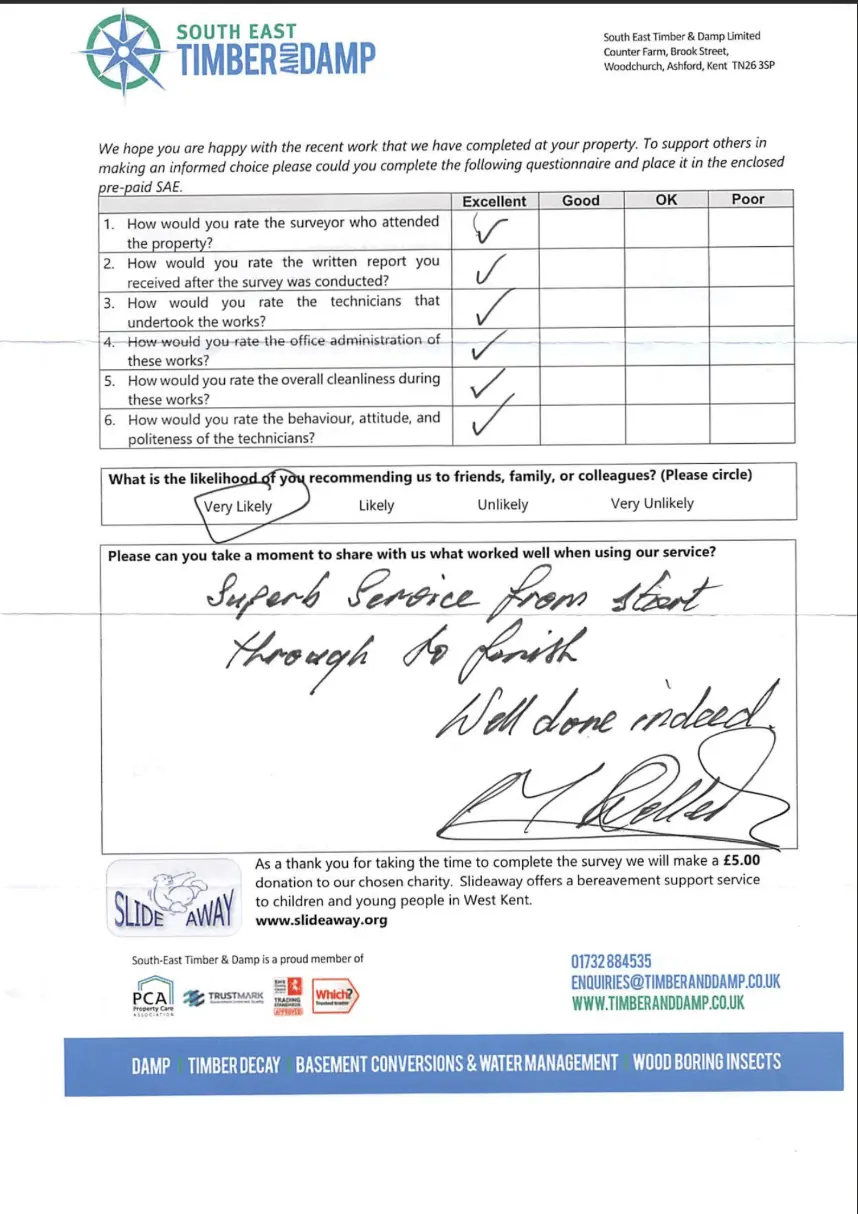
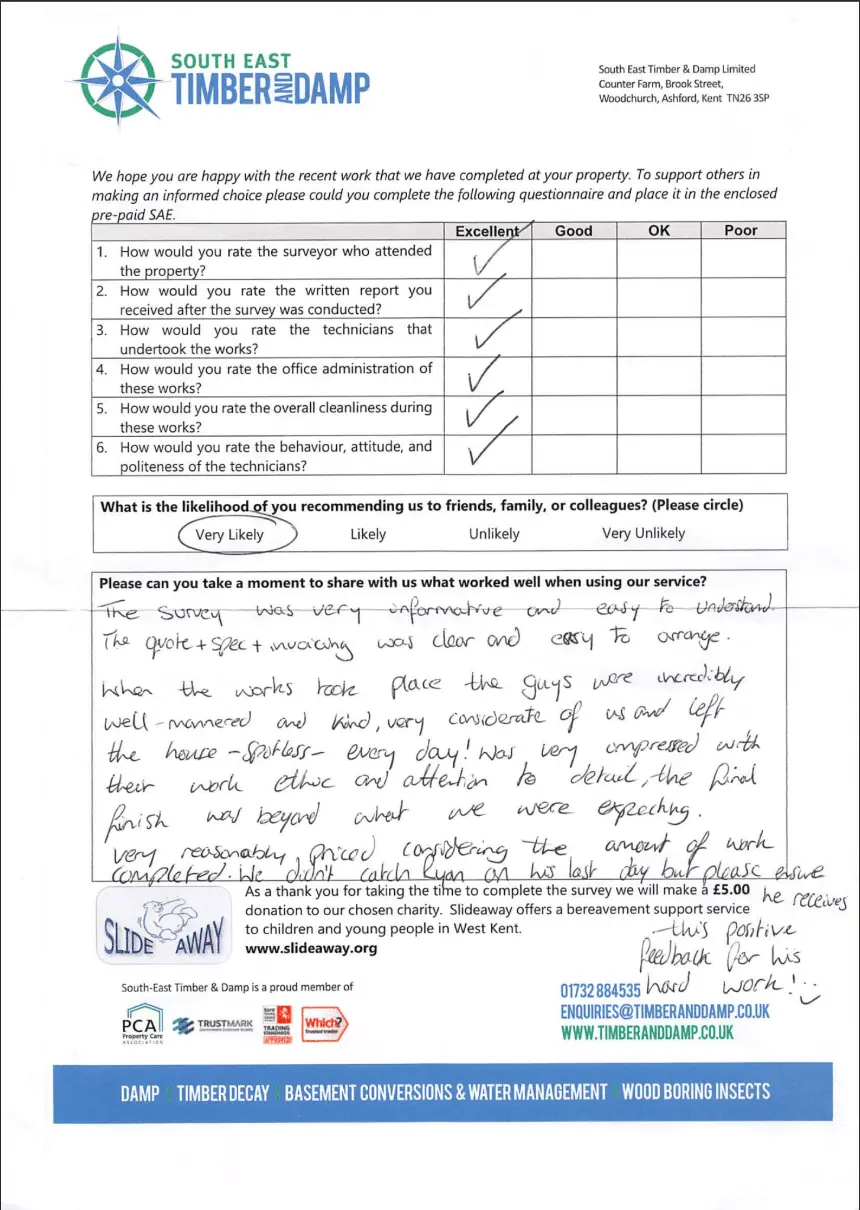
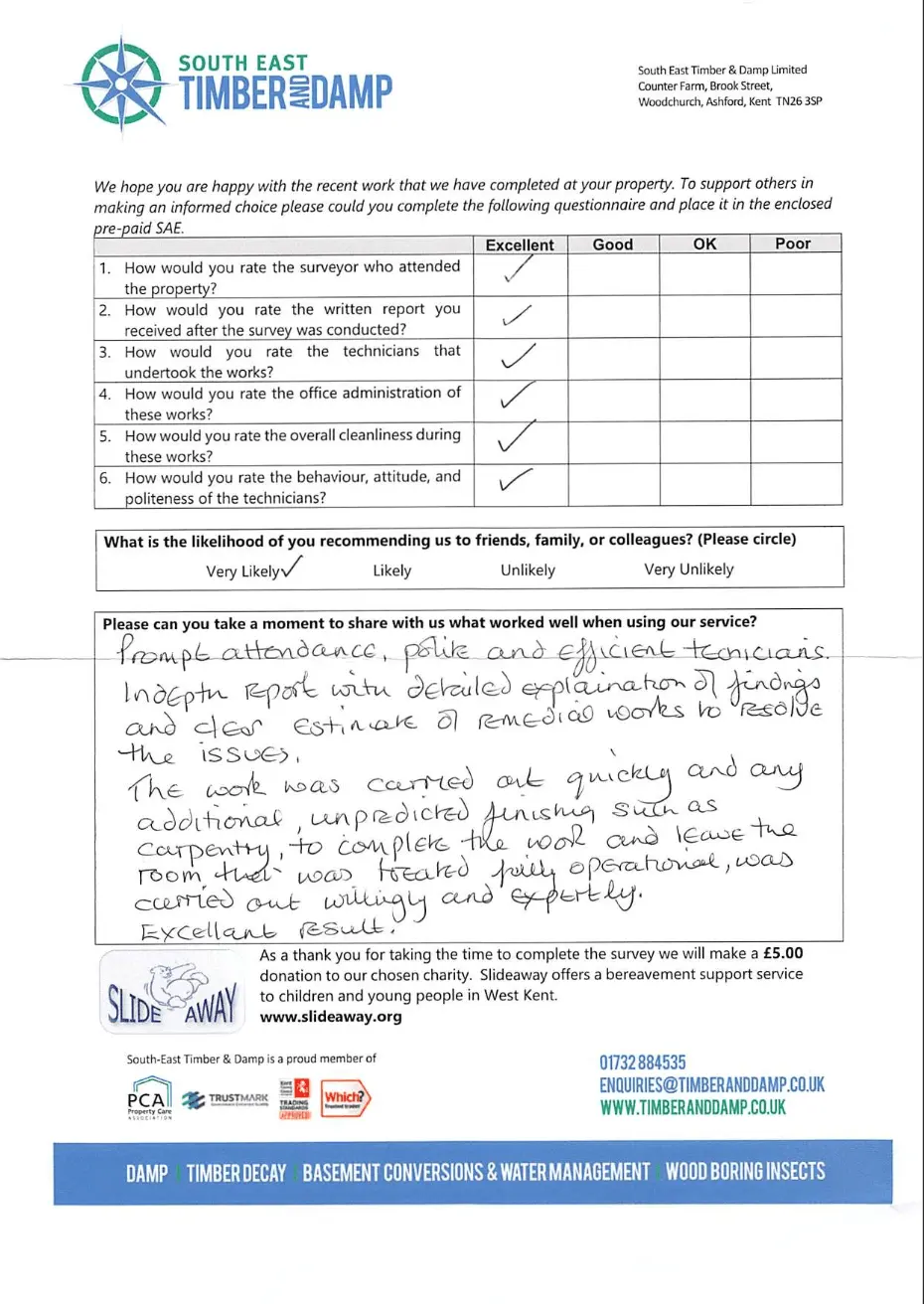
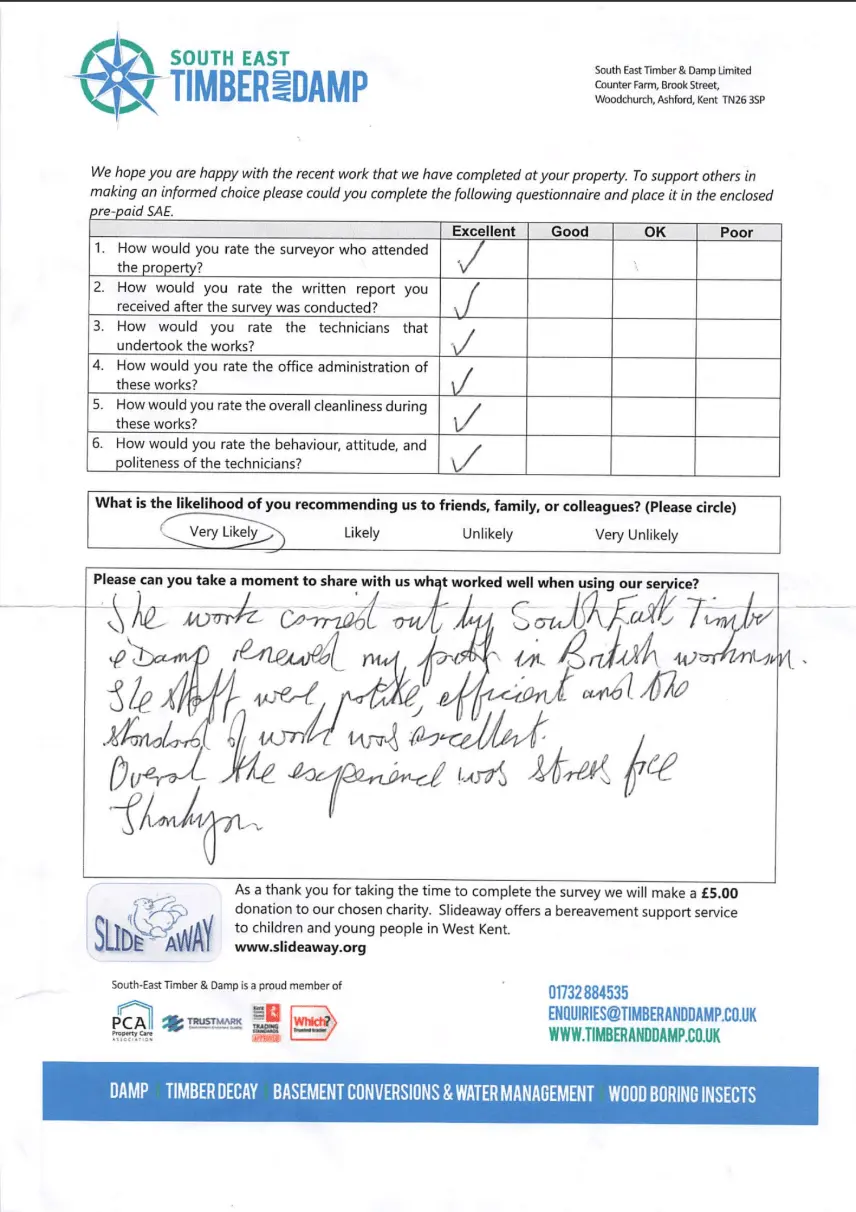
    Our Customer Reviews

    How to identify Dry Rot

    The appearance depends on its stage of development. Identification is also hampered because it is generally found in areas you can't see, whether under the floorboards, in the attic, or hidden behind plasterboard.

    It flourishes in areas of poor ventilation and requires the moisture that exists in wood as fuel to thrive. One of the non-visual indicators to be aware of is a stale, musty smell that will emanate from the affected area.

    Dry Rot Tell-Tale Signs

    The early tell-tale signs are the emergence of Sporophores, known as Fruiting Bodies or the shrinking of timbers. By its nature, dry rot aims to extract the moisture from the wood, which shrinks the wood and leaves significant cracks along the grain.

    If the condition is left unchecked, the latter stages of the infection will affect the stability of the wood, and this will become noticeable quickly.

    Difference between Dry and Wet Rot

    The main difference between dry rot and many other fungal infections is the fact that it will spread quickly. It only requires 20% moisture in the wood to develop and has no problem capitalising on the porous nature of masonry to find its next food source.

    Since it generally exists hidden from view, it is probably worth considering that the situation in your house will likely be in an advanced state, and early action will always result in a better outcome

    For more information, here is some guidance from our partners at the PCA.

    Dry Rot Frequently Asked Questions

    This is the question we get asked more than any other when it comes to timber decay, and it is an important one to get right because the two need very different approaches to treat.

    Wet rot is the more common of the two. It occurs when timber remains damp for a prolonged period, usually because of a persistent moisture source nearby, such as a leaking pipe, damaged guttering, or rising damp.

    The good news is that wet rot tends to stay confined to the immediate area where the moisture is present. Remove the moisture source, and the rot stops progressing. The affected timber will need to be repaired or replaced, but the problem does not spread through the fabric of the building.

    Dry rot is a different matter entirely, and it is why the name causes so much confusion. Despite being called "dry" rot, it is actually caused by a specific fungus called Serpula lacrymans that needs damp timber to get started, but once established it has the extraordinary ability to transport moisture through the building itself, spreading through masonry, plaster, and brickwork to reach and infect timber that was previously perfectly dry. This is what makes it so serious and why it needs professional treatment as a matter of urgency.

    In Kent, where a significant proportion of the housing stock is Victorian, Edwardian, or older, we encounter both regularly. Period properties with original floor joists, roof timbers, and subfloor voids that have been exposed to damp for years are particularly vulnerable.

    Both produce some similar symptoms, which is why correct identification really matters before any treatment begins.

    With wet rot you are typically looking for timber that has darkened or discoloured, feels soft or spongy when pressed, and may crack along the grain. There can be a musty smell, and in some cases you will see a white or brown fungal growth on the surface of affected timber. The key point is that it stays close to the source of moisture.

    Dry rot has some distinctive additional signs. Look for cracking across as well as along the grain, which gives the timber a cuboid appearance, sometimes described as looking like a grid or cracked chocolate. White or grey strands, a bit like cobwebs, spreading across surfaces are a classic early sign of mycelium growth.

    In more advanced cases, you may see a fruiting body, which looks like a fleshy orange or brown mushroom with a distinctive dusty red spore deposit around it. Orange or red dust on floors or surfaces near timber is one of the clearest indicators that dry rot is present.

    If you are at all unsure, please do not attempt to treat it yourself. Misdiagnosing dry rot as wet rot and treating accordingly is one of the most costly mistakes we see, because it leaves the fungus free to keep spreading behind walls and under floors while the homeowner thinks the problem has been resolved.

    Yes, both can, though dry rot carries the greater structural risk because of its ability to spread.

    Floor joists, roof rafters, window frames, stair strings, and any other load-bearing timber are all vulnerable, and the internal damage is often far more extensive than the surface signs suggest.

    We regularly carry out surveys in Kent properties where a small visible patch of rot turns out to be the tip of a much larger problem once the affected area is properly opened up.

    Wet rot, while less aggressive, can still cause significant structural weakening in the timber it affects. Skirting boards, door frames, window frames, and subfloor timbers close to moisture sources are all commonly affected.

    Left long enough, wet rot can compromise the structural integrity of any load-bearing timber it takes hold in.

    Both types are best caught early. The longer either is left, the more timber will need to be removed and replaced, and the more expensive the overall remediation becomes.

    The treatments share some common elements but are genuinely different in scope.

    For both types, the single most important first step is finding and eliminating the source of moisture. Treating the rot without addressing what is causing it is a waste of money because the conditions that allowed it to develop will simply cause it to return.

    Once the moisture source is resolved, affected timber needs to be assessed and either treated in place or replaced where it has been structurally compromised.

    For wet rot, once the source is dealt with and the area dried out, treatment is usually straightforward. Affected surfaces are treated with a fungicidal solution, and damaged timber is repaired or replaced. The contained nature of wet rot means the remediation zone is generally well defined.

    Dry rot requires a considerably more thorough approach. Because the fungus can spread through masonry, the affected area needs to be carefully mapped before any work begins. All infected timber must be removed with a margin of apparently sound timber on either side to be safe.

    Masonry in the affected zone is treated with a masonry biocide. Replacement timber should be pre-treated, and ventilation improvements are usually needed to prevent the conditions recurring.

    In older Kent properties, this can be a significant piece of work, but cutting corners on dry rot remediation is a false economy.

    Yes, both will be flagged by a surveyor and will require attention before most buyers or their mortgage lenders will be comfortable proceeding.

    Dry rot in particular can cause significant concern during a sale because of its reputation for spreading, and some buyers will walk away from a property where it is present without having the full picture of what is involved in resolving it.

    The most straightforward position to be in when selling is to have had a proper specialist survey carried out, the source of moisture identified and resolved, and any remedial timber works completed and covered by a written guarantee. That documentation gives buyers and lenders confidence that the problem has been professionally resolved rather than simply painted over.

    If you are buying a property in Kent or South East London where dry or wet rot has been flagged in a homebuyer's survey, a specialist timber and damp inspection before you exchange will give you a clear picture of the extent of the problem, what it will cost to put right, and whether the treatment that has already been applied is adequate. That information is almost always worth having before you commit.

    Annabelle-and-Dean-Webster

    Need help? Book a survey at a time to suit your schedule

    Our mission is to give you the peace of mind you deserve when it comes to waterproofing your house or business. Commission a survey from our team to assess your situation professionally.